What's Involved in an Emissions Test? A Guide for Denver Drivers

April 7, 2025

For many drivers in Denver and surrounding areas, navigating vehicle emissions tests can be confusing yet necessary. Colorado has specific emissions testing requirements that all vehicle owners must follow to maintain registration. Here's everything you need to know about emissions testing in our area.

What Is an Emissions Test?

An emissions test measures the pollutants coming from your vehicle's exhaust system to ensure they fall within acceptable limits. These tests help:

  • Reduce air pollution in the Denver metro area
  • Improve air quality in our densely populated communities
  • Ensure vehicles are running efficiently
  • Identify vehicles that need repair or maintenance

Modern vehicles are designed with complex emissions control systems, and when these systems function properly, they significantly reduce harmful pollutants released into our atmosphere.

Colorado Emissions Testing Requirements

In Denver and the surrounding counties, emissions testing is required for:

  • Gasoline vehicles model year 1982 and newer
  • Diesel vehicles with a gross vehicle weight rating of 14,000 pounds or less
  • Vehicles registered in the counties of Denver, Boulder, Broomfield, Douglas, and parts of Adams, Arapahoe, Jefferson, Larimer, and Weld
  • Most vehicles must be tested every two years (during registration renewal)
  • New vehicles are exempt from testing for the first seven model years

Types of Emissions Tests You Might Encounter

There are several different types of emissions tests that might be performed, depending on your vehicle:

OBD-II Test

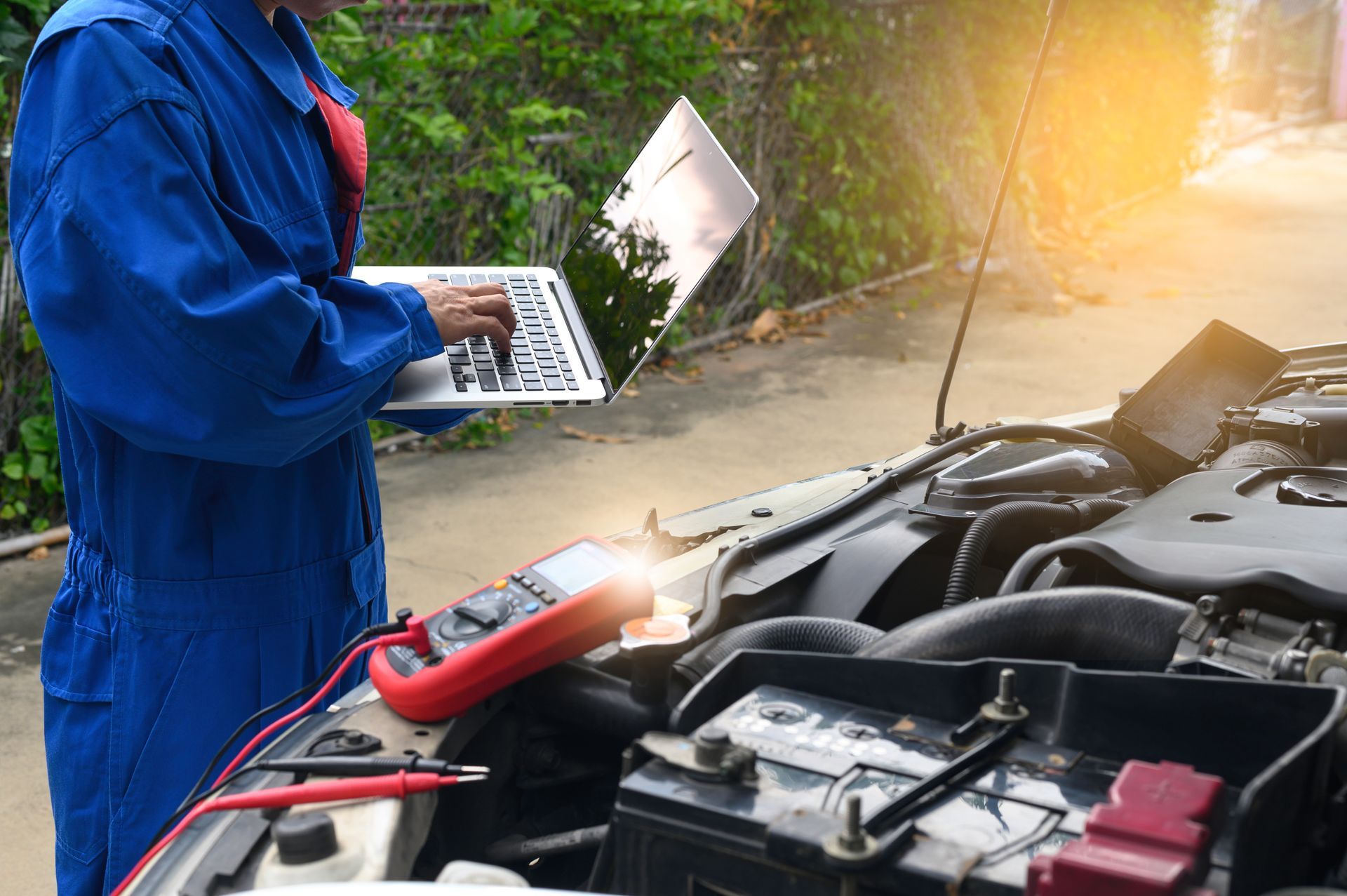
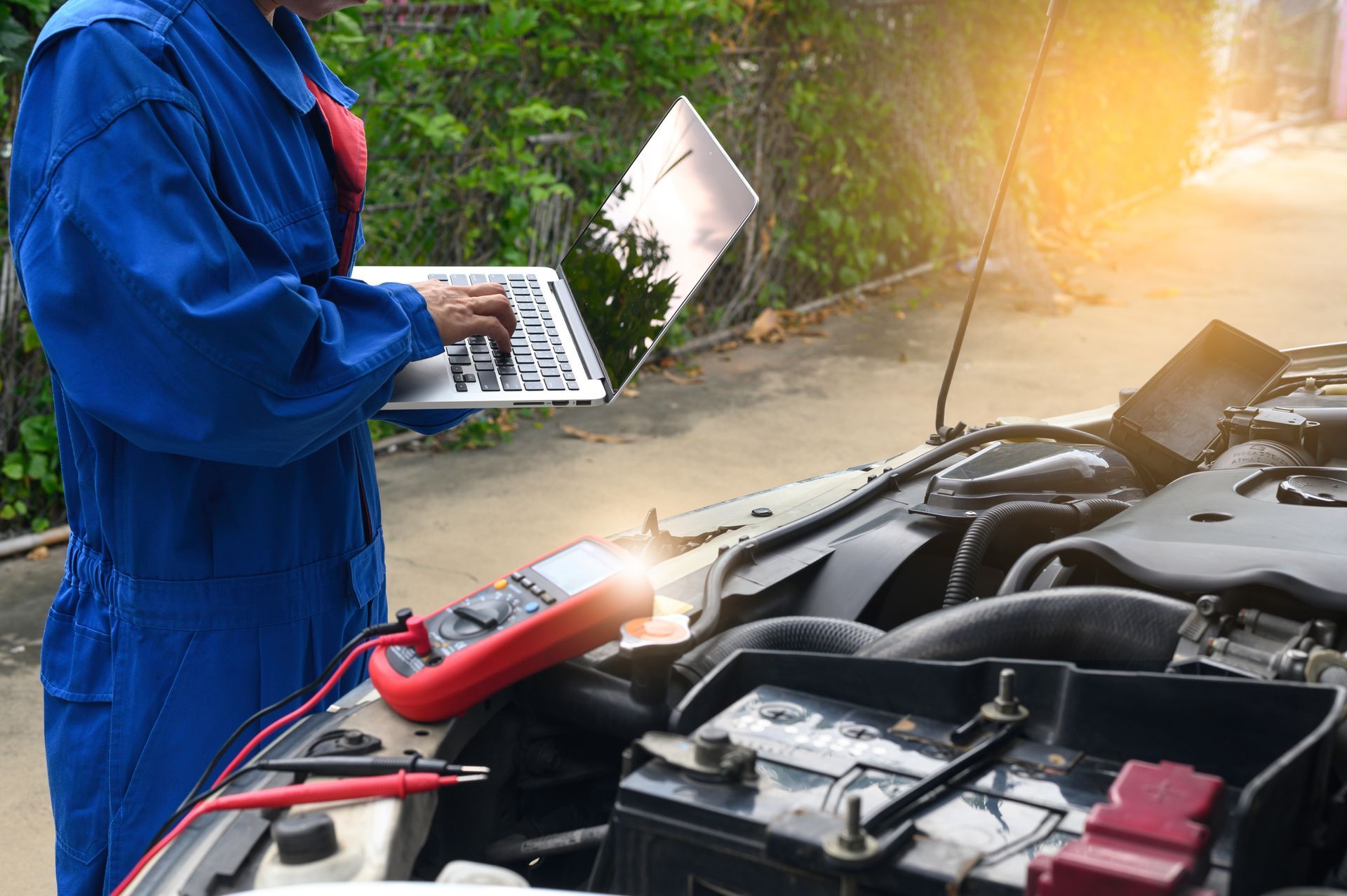
The most common modern emissions test is the OBD-II (On-Board Diagnostics) test, which:

  • Connects to your vehicle's computer system
  • Checks if emissions control systems are working correctly
  • Looks for stored trouble codes related to emissions
  • Verifies that the "Check Engine" light is functioning properly

This is a quick, non-invasive test that takes just a few minutes to complete and is typically used for vehicles from 1996 and newer.

Tailpipe Test

For older vehicles (1982-1995), testing may involve:

  • Placing a probe directly into your vehicle's exhaust pipe
  • Measuring pollutants like hydrocarbons (HC), carbon monoxide (CO), and nitrogen oxides (NOx)
  • Sometimes requiring the vehicle to be run on a dynamometer (a treadmill-like device for cars)

Visual Inspection

Some testing stations also perform:

  • A check for missing emissions components
  • Inspection of the gas cap to ensure it seals properly
  • Visual examination of exhaust components

What Happens During an Emissions Test?

If you're taking your vehicle for an emissions test, here's what to expect:

  1. Preparation : The technician will verify your vehicle information and may check if your "Check Engine" light is on.
  2. Connection : For OBD-II tests, they'll plug a scanning device into your diagnostic port, typically located under the dashboard.
  3. Data Reading : The scanner retrieves information about your emissions systems and any stored fault codes.
  4. Analysis : Results are analyzed to determine if your vehicle passes or fails based on the standards for your specific vehicle year, make, and model.
  5. Documentation : You'll receive documentation showing whether your vehicle passed or failed.

The entire process typically takes 15-30 minutes, depending on the type of test and how busy the facility is.

Common Reasons Vehicles Fail Emissions Tests

For Denver residents, here are common reasons vehicles fail emissions tests:

  • Check Engine Light is on : This is an automatic fail in Colorado
  • Faulty oxygen sensors : These measure how efficiently your engine is burning fuel
  • Bad catalytic converter : This device reduces harmful emissions
  • Loose or damaged gas cap : Can cause fuel system pressure issues and increase emissions
  • Rich fuel mixture : When too much fuel is being burned
  • Exhaust leaks : Allow unfiltered emissions to escape
  • Failing EVAP system : Issues with the system that contains fuel vapors

How to Prepare Your Vehicle for an Emissions Test

If you're planning to have your vehicle tested, these steps can help improve your chances of passing:

  • Address the Check Engine Light : If it's illuminated, have it diagnosed and repaired at Importsports before testing.
  • Get a Tune-Up : Regular maintenance like spark plug replacement and air filter changes can significantly improve emissions performance.
  • Drive Your Car : Take your vehicle for a 20-minute drive on I-25 or I-70 before the test to help the catalytic converter reach optimal operating temperature.
  • Check Your Gas Cap : Ensure it clicks when tightened and has no cracks or damage.
  • Use Quality Fuel : Fill up with high-quality gas from reputable stations in Denver.

Where Denver Residents Can Get Emissions Help

Managing emissions-related issues is essential for both passing your emissions test and maintaining your vehicle's performance and our local air quality.

At Importsports Auto Repair Pros & Performance, our ASE Certified technicians are equipped with factory diagnostic software and advanced equipment to:

  • Identify emissions-related problems in European, Japanese, Korean, and American vehicles
  • Make necessary repairs to ensure your vehicle passes emissions testing
  • Perform pre-test inspections if you're concerned about your vehicle's emissions status
  • Help you understand what repairs are truly necessary

Our convenient location at 7667 E Iliff Ave Ste I in Denver means you don't have to travel far for expert emissions system diagnosis and repair. Plus, all our repairs are backed by our 36-Month/36k-Mile TechNet Nationwide Warranty.

Special Considerations for European and Import Vehicles

As specialists in European vehicle repair, we understand that imports often have more sophisticated emissions systems that require expert knowledge and specialized diagnostic equipment. Our technicians have extensive experience with the emissions systems in vehicles from manufacturers like:

  • BMW
  • Mercedes-Benz
  • Audi
  • Volkswagen
  • Porsche
  • Toyota
  • Honda
  • Subaru
  • And many more

This expertise means we can quickly identify and resolve emissions issues in these vehicles, saving you time and money.

Need Help with Emissions or Check Engine Light Issues?

If your Check Engine light is on or you're concerned about your vehicle's emissions system, don't wait until you fail a test. Contact Importsports Auto Repair Pros & Performance today at (303) 752-2422 or schedule an appointment online.

Our team of experienced technicians can quickly diagnose emissions problems, recommend practical solutions, and get your vehicle running cleanly and efficiently. We pride ourselves on honest, transparent service for all Denver residents – ensuring your vehicle not only passes required tests but also contributes less pollution to our local Colorado environment.

Importsports has been serving the Denver community since 1997, and we're committed to helping you maintain your vehicle's performance while keeping our air clean. Trust our expertise to keep your vehicle compliant with Colorado's emissions standards and running at its best.
What Does a Transmission Slip Feel Like? | Importsports
July 31, 2026
Learn the signs of a slipping transmission and when to visit Importsports in Denver, CO for professional transmission service.
What Does An Engine Tune-Up Include On Modern Cars? | Importsports
June 30, 2026
The phrase engine tune-up used to mean a fairly predictable list of parts. Spark plugs, wires, distributor parts, timing adjustments, and a few basic checks were the usual routine. Modern cars are different. Many of those older parts are gone, and the engine computer now handles adjustments that once had to be done by hand. That does not mean tune-ups disappeared. They changed. A modern tune-up is more about checking the systems that help the engine start cleanly, idle evenly, use fuel properly, and respond the way it should. Instead of one standard service for every car, it should be based on the vehicle’s mileage, condition, service history, and symptoms. Spark Plugs Still Matter Spark plugs are still one of the most important tune-up parts. They create the spark that ignites the air-fuel mixture in each cylinder. As they wear, the gap can grow, deposits can build up, and the spark may become weaker under load. Worn spark plugs can cause rough starts, poor fuel economy, hesitation, misfires, and a check engine light. On turbocharged or higher-compression engines, weak plugs can show up more quickly during acceleration. Replacing spark plugs at the correct interval helps protect ignition coils and keeps the engine firing cleanly. Ignition Coils Need To Be Checked Modern vehicles commonly use ignition coils instead of older distributor-style ignition parts. These coils create the voltage needed for each spark plug to fire. A weak coil can cause a misfire that feels like shaking, stumbling, or a loss of power. Coils should not be replaced blindly unless the vehicle’s service plan calls for it. A proper inspection can check misfire data, coil performance, plug condition, wiring, and whether the problem occurs on a specific cylinder. That testing helps separate a bad coil from a fuel, air, or compression issue. Air And Cabin Filters Are Part Of The Picture An engine needs clean airflow. A clogged engine air filter can reduce performance, hurt fuel economy, and make the engine work harder than it should. In dusty conditions or heavy city driving, filters can get dirty sooner than expected. A modern tune-up may also include checking the cabin air filter, even though it does not affect engine combustion directly. A clogged cabin filter can reduce airflow through the vents, making the HVAC system feel weak. Filter checks are simple, but they are easy to forget during regular maintenance. Fuel System Checks Can Explain Rough Running Fuel delivery plays a major role in how the engine feels. A weak fuel pump, dirty injectors, a clogged filter on vehicles that have a serviceable one, or poor fuel pressure can cause hard starts, hesitation, rough idle, and weak acceleration. Not every car needs a fuel cleaning service at every tune-up. The smarter approach is to examine symptoms, mileage, fuel-trim data, and injector performance. If the engine is running lean, rich, or unevenly, fuel system testing can help show whether fuel delivery is part of the problem. Sensors And Computer Data Matter More Than Ever Modern engines rely on sensors for nearly every decision. The computer monitors airflow, oxygen content, coolant temperature, throttle position, crankshaft position, camshaft position, fuel pressure, and other readings while the vehicle is running. A tune-up today may include scanning for codes and reviewing live data. That does not mean replacing every sensor that appears in a code. A sensor can fail, but it can also report a real problem somewhere else. Live data helps show whether the engine is breathing, fueling, and warming up the way it should. Fluids, Belts, And Battery Health Still Count A good tune-up should not only focus on spark and fuel. Engine oil condition, coolant level, brake fluid, transmission fluid, belts, hoses, battery condition, and charging system performance can all affect how dependable the vehicle feels. A weak battery can make starting problems look like engine trouble. Low coolant can create heat concerns. Old oil can affect variable valve timing systems on many engines. A cracked belt or an aging hose can cause a normal drive to break down without much warning. The tune-up should include a broader look at the vehicle, not only the parts that fire the cylinders. Symptoms That May Point To A Tune-Up Drivers often ask for a tune-up because the car feels off, but the symptoms can vary. Some are mild. Some are more urgent. Hard starts Rough idle Poor fuel economy Hesitation when accelerating Check engine light Engine shaking Loss of power uphill Fuel smell or misfire codes Those clues help guide the service. A car with a rough idle may need plugs, but it may also need a throttle body cleaning, vacuum leak repair, sensor testing, or injector work. The symptom should shape the tune-up, not the other way around. Why Modern Tune-Ups Should Be Vehicle-Specific Two cars with the same mileage may not need the same work. One may be overdue for spark plugs. Another may need filters, fluid service, or a diagnostic for a stored code . A third may have no major issues but needs a maintenance plan tailored to age and driving habits. That is why modern tune-ups work best when they start with a careful check. The shop should review service history, scan for codes when needed, inspect key parts, and compare recommendations with the manufacturer’s schedule. That approach helps prevent unnecessary parts replacement and keeps the engine care focused. Get Engine Tune-Up Service In Denver, CO, With Importsports If your vehicle has rough starts, poor fuel economy, hesitation, misfires, warning lights, or overdue maintenance, Importsports in Denver, CO, can check the ignition, filters, fuel system, fluids, battery, and related engine data. For modern engine tune-up service that starts with clear testing and a practical inspection, contact us to schedule an appointment .
How Preventive Car Maintenance Helps Keep Your Vehicle Reliable | Importsports
May 29, 2026
ImportSports in Denver, CO, explains how preventive car maintenance helps drivers avoid more serious reliability problems.
How to Prepare Your Vehicle for a Road Trip | Importsports
April 30, 2026
Importsports in Denver, CO, explains how to prepare your vehicle for a safe and stress-free road trip.
What Can a Computer Diagnostic Tell You About Your Car? | Importsports
March 31, 2026
Importsports in Denver, CO, explains what a computer diagnostic can reveal about your car and its hidden problems.
Why There Are So Many Potholes After the Winter and How They Are Ruining Your Car | Importsports
February 27, 2026
Importsports in Denver, CO, explains why winter brings more potholes and how they can damage tires, wheels, and suspension.